
Where the conversations land
Automation handles the questions it was given the material to handle. Everything else needs a person, and the moment of transfer is where most chat setups quietly fall apart: the visitor repeats themselves, the teammate guesses at the context, and the goodwill built up over three helpful answers evaporates.
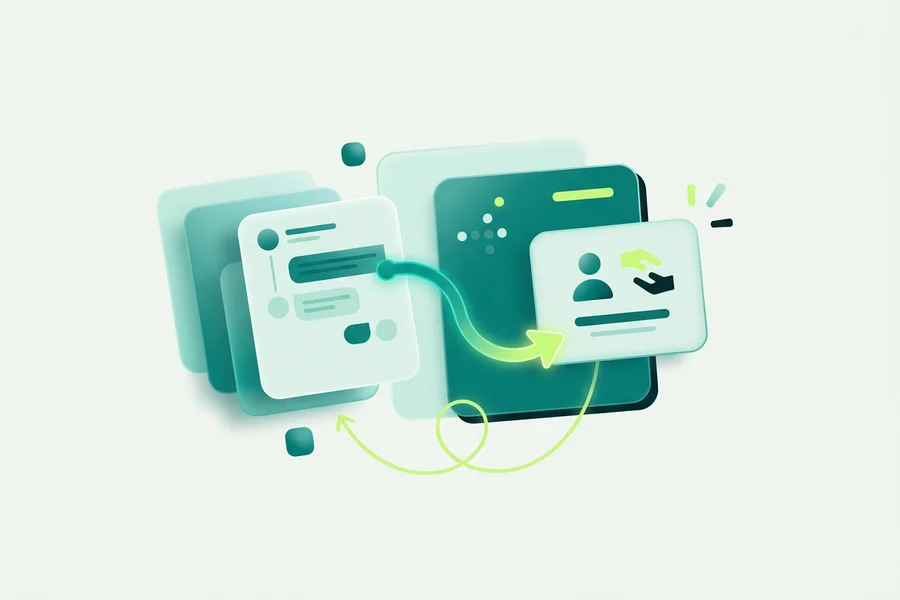
The shared team inbox is the other half of that handoff. When a flow escalates, a refusal threshold trips, a turn limit is reached or the provider errors, the conversation moves into the inbox with its history intact. Bot ownership stops. A person owns the reply, and can read everything that happened before they arrived.
Common problems this solves
“Two of us replied to the same person.” Assignment gives a conversation an owner. Returning it to the queue hands it back deliberately rather than by silence.
“We lost the thread from March.” Search retained conversations by contact details, messages, notes and tags, and page back through older history. Idle conversations remain in retained history; going quiet is not the same as being deleted.
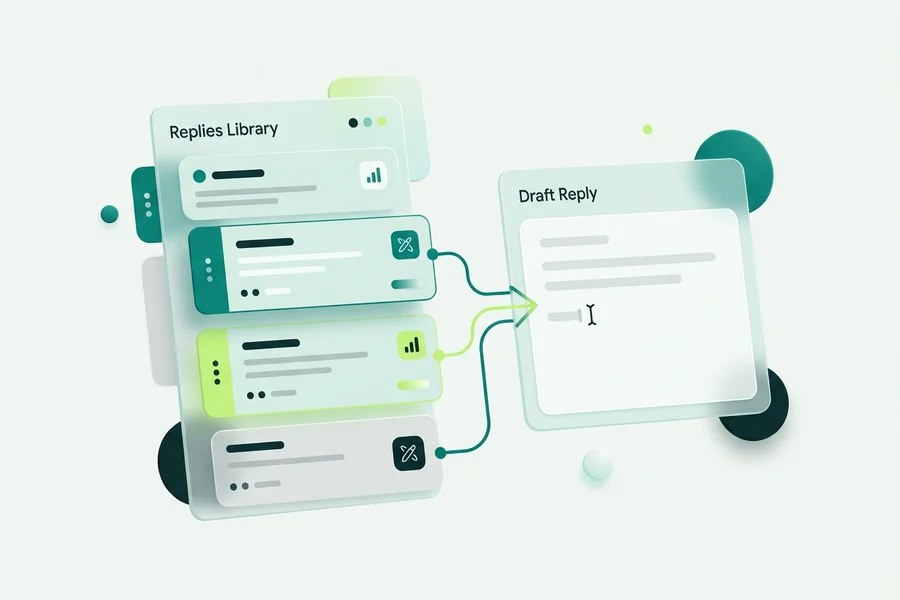
“We type the same four answers all day.” Personal and shared saved replies, searchable by title, shortcut or body. The shortcut inserts the text into your draft so you can adapt it before sending. It never sends on your behalf.
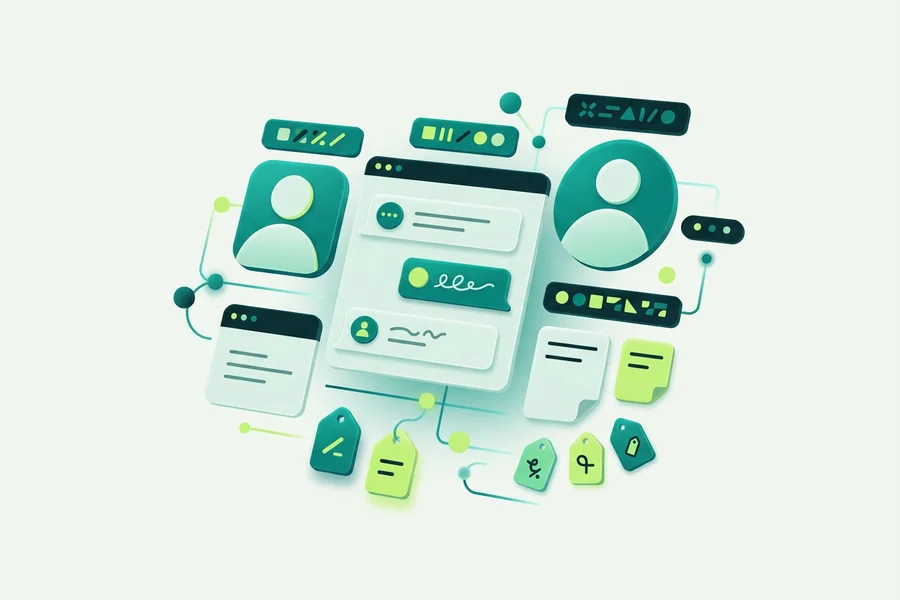
“Half the context lives in someone’s head.” Append-only private notes attach the background to the conversation, with an author and a timestamp, and stay out of visitor messages and AI history.
How a day in the inbox goes
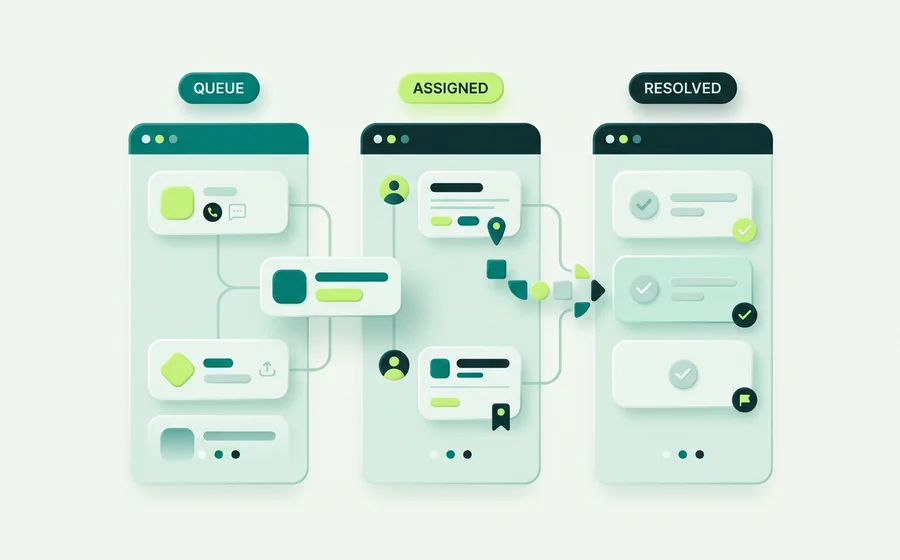
A conversation arrives in the queue. Someone picks it up, or it is assigned to whoever owns that kind of question. They read the history, including anything a Form or One field step collected on the way in. They reply, attaching a file if the answer needs one, pulling in a saved reply if it is a familiar question, and leaving a private note if the next person will need to know something.
If it turns out to belong to someone else, it goes back to the queue with the note attached. When it’s done, it’s resolved. If the customer comes back three weeks later, it’s reopened rather than starting over. Conversations can be reviewed on smaller browser screens too, which matters more than it sounds when the only person free is on a laptop in a café.
What it deliberately does not do
Alerts are delivered while the inbox is open. In-app alerts cover relevant visitor messages and assignments, and optional desktop notifications work once you enable them and grant browser permission. There is no closed-browser push, no native mobile notification centre and no synchronised notification history across devices. Notes are append-only in this release: no editing, no mentions, no note attachments.
We list those here rather than letting you discover them in week two.
Where this fits
The inbox is the destination for handoffs from the Grounded AI Agent and escalations built into the Visual Bot Flow Builder. Once conversations are flowing through it, Response-Time Reporting tells you how quickly a human actually answered.
When a shared inbox becomes necessary
The trigger is not volume. It is the second person.
One person answering everything needs no coordination, and any inbox is fine. The moment two people are both capable of replying, three costs appear immediately: deciding who takes what, avoiding duplicate replies, and passing context between them. Those costs are paid whether or not you have a tool, usually in interruptions.
The other trigger is chat itself. A live conversation that needs a person cannot wait for someone to notice an email. It needs somewhere to land, immediately, with its history attached.
Conventions matter more than configuration
A shared inbox where nobody assigns anything is a group email with extra steps. Four rules are enough for most teams, and they are worth agreeing once rather than negotiating repeatedly:
Assign when you reply. It costs a click and removes the question entirely.
Return to queue rather than walking away. Explicit beats implicit, particularly when someone is busy.
Resolve when the customer’s need is met, not when you are tired of the thread. Reopening exists for the times you were wrong.
Leave a note whenever the next person would otherwise ask. Notes are append-only, so write facts and keep them short.
Teams that agree these four in the first week get most of the benefit. Teams that do not tend to conclude, six months later, that the tool did not change anything.
For more depth, read how the shared inbox routes and assigns conversations and shared team inbox vs a shared email address.